Serving Clarksville and Montgomery CountyCall Now: (931) 463‑0015

Service guide directory

Garage Door Repair Guides for Clarksville, TN

Start with the closest visible symptom or project goal. Each guide explains useful request details, safety boundaries, and proposal questions; the provider still confirms the diagnosis and scope on site.

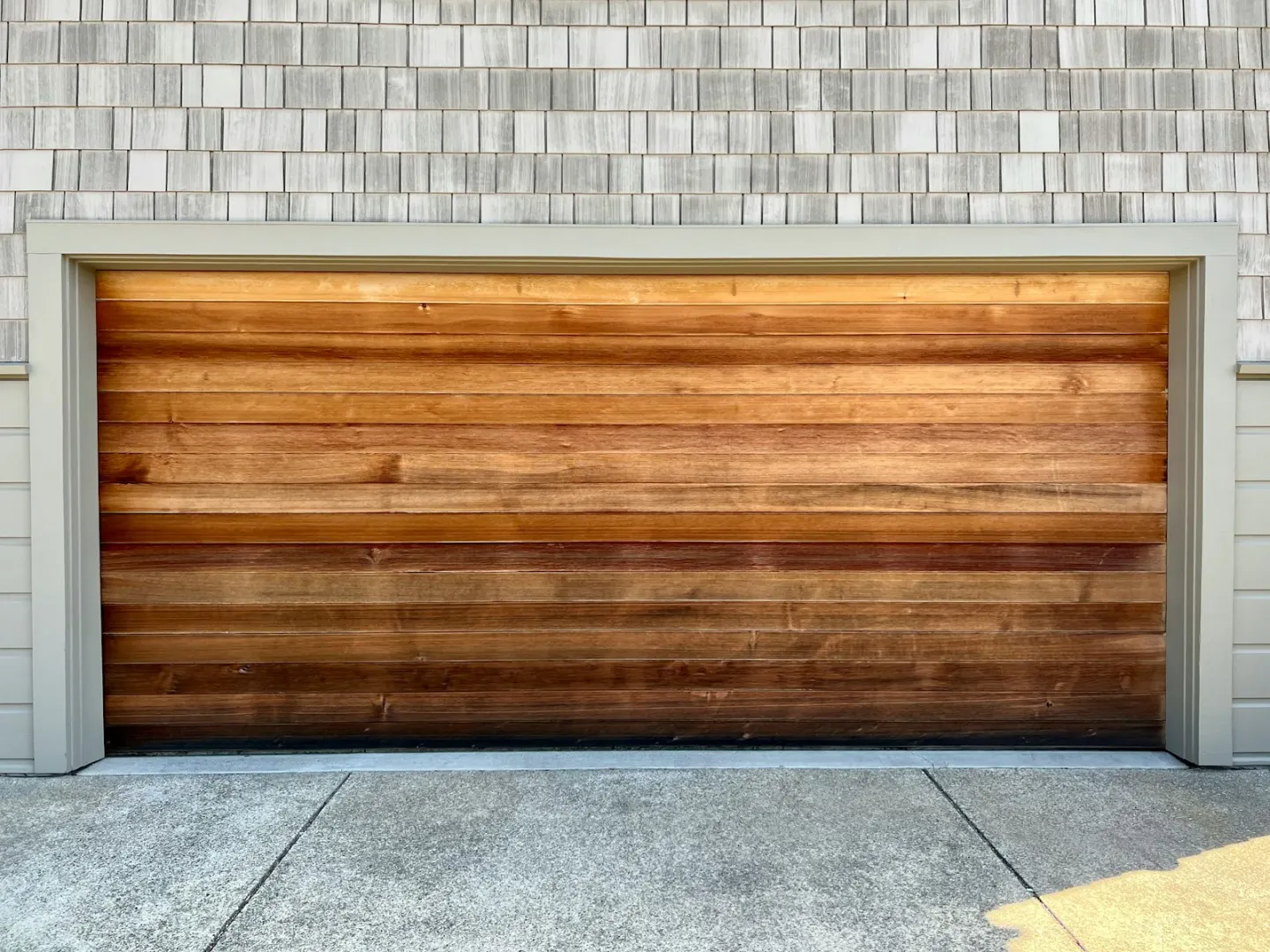
Contextual wood-look residential garage door
Illustrative residential garage-door image.
Free Quote RequestNo ObligationLocal Service GuidesYou Choose Whether to Hire

Choose a focused guide

Compare the Request Before You Contact a Provider

The service pages are informational starting points, not representations of completed work or promises that a particular provider is available.

Closed white sectional garage door used as a contextual spring-repair image

Guide 01

Broken Spring Repair

A loud bang, a visible gap in a torsion spring, or a door that suddenly feels unusually heavy can point toward a spring-system problem. Cables, drums, bearings, and door balance may also need evaluation.

  • Leave the door where it is and keep people clear.
  • Do not wind, stretch, or touch a spring or loose cable.
  • Report door width, current position, and any visible spring gap.
Open the complete guide →
Residential garage exterior used as a contextual opener-repair image

Guide 02

Garage Door Opener Repair

An opener problem may involve power, wall controls, remotes, photo eyes, travel settings, internal gears, a logic board, or a door that is too difficult for the motor to move. Repeated operation can add strain.

  • Check only simple items such as power and obvious obstructions.
  • Record blinking lights, beeps, unusual sounds, and the opener model.
  • Stop if the door is crooked, binds, or has a broken spring or cable.
Open the complete guide →
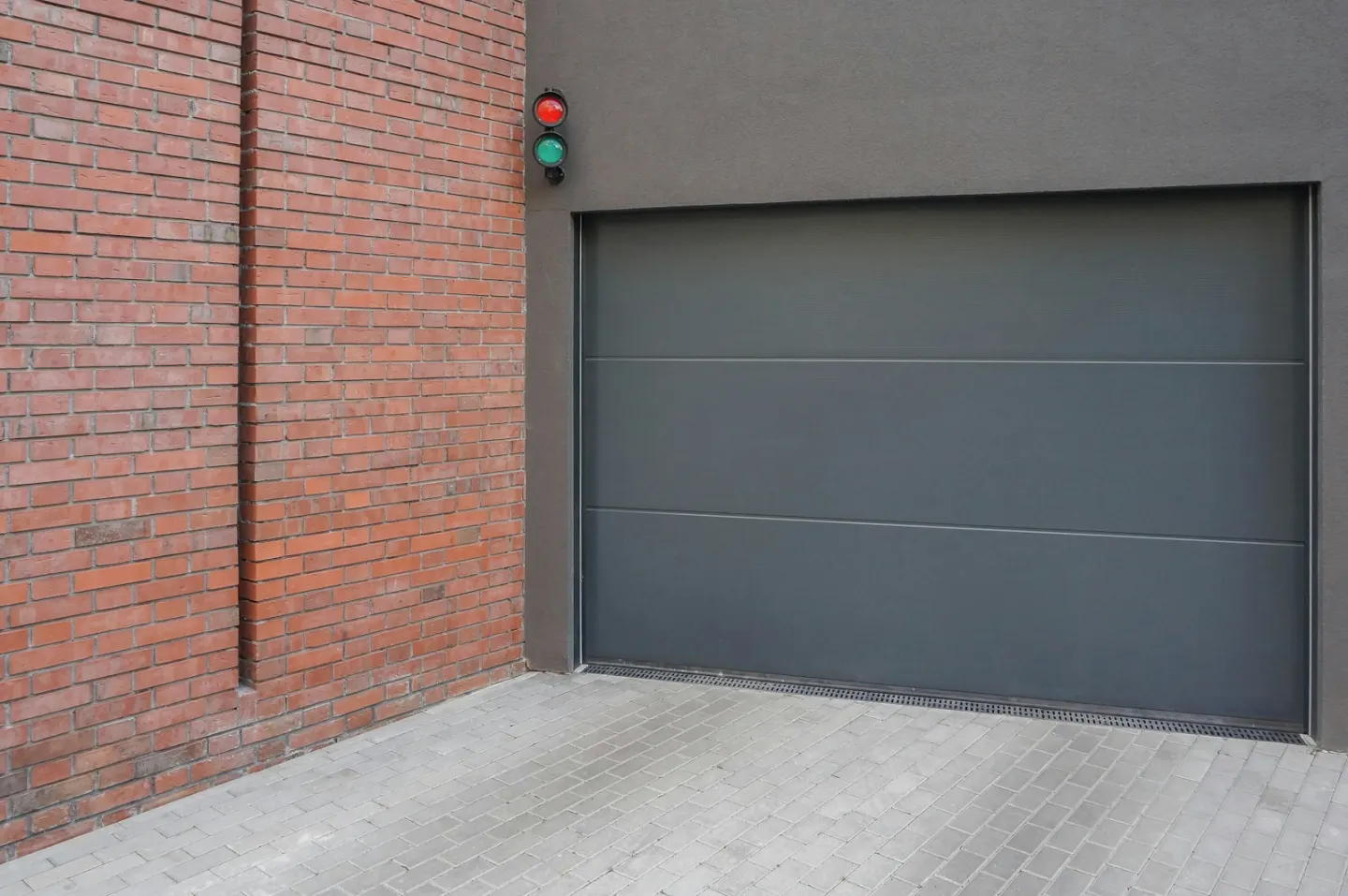
Grey sectional garage door used as a contextual track-repair image

Guide 03

Off-Track or Stuck Garage Door

A door that hangs unevenly, leaves a roller outside the track, or stops halfway can shift without warning. Tracks, rollers, cables, hinges, panels, and door balance may all be part of the inspection.

  • Stop using the opener and keep clear of the door path.
  • Do not push a roller back into place or pull an emergency release under a raised door.
  • Tell the provider whether a vehicle or entry route is blocked.
Open the complete guide →
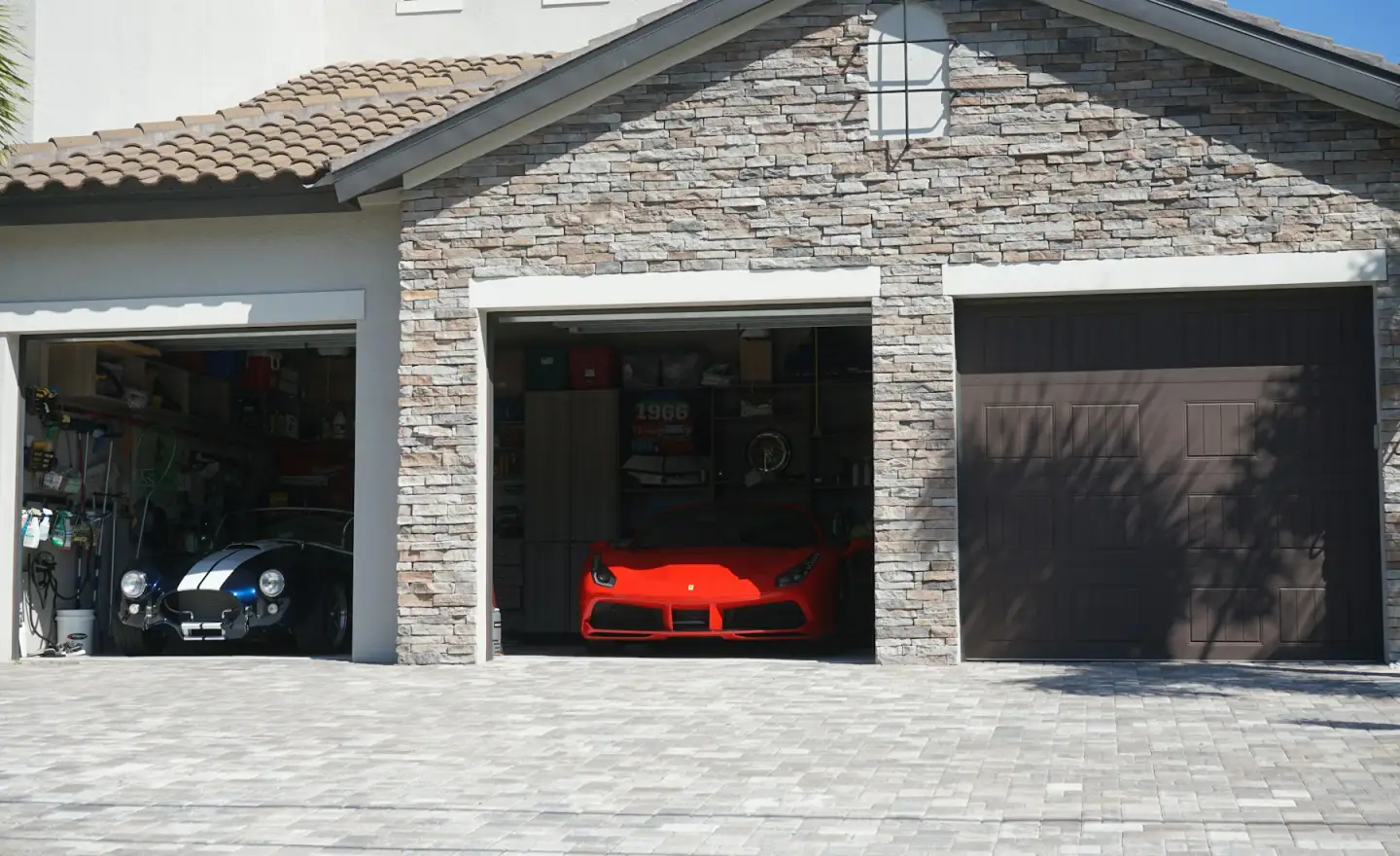
Residential garage doors used as contextual cable-and-roller service imagery

Guide 04

Cable and Roller Repair

Frayed cable strands, a slack cable on one side, jerky movement, grinding, squealing, or rollers that leave the track deserve a careful evaluation. Similar noises can have different causes.

  • Do not touch, cut, or tighten a loose cable.
  • Note which side looks or sounds different and where travel becomes rough.
  • Ask the provider to separate required safety work from optional improvements.
Open the complete guide →
Wood-look sectional garage door used as contextual installation imagery

Guide 05

New Garage Door Installation

A complete replacement proposal can include the door, sections, finish, insulation, tracks, springs, seals, reinforcement, opener compatibility, removal, haul-away, labor, and separate warranty terms.

  • Compare the complete installed package—not only the door price.
  • Confirm product specifications and any relevant wind-rating information.
  • Separate manufacturer coverage from provider workmanship terms.
Open the complete guide →
Open residential garage used as contextual maintenance imagery

Guide 06

Maintenance and Safety Inspection

A maintenance visit may include visual inspection, fastener checks, balance and travel observations, opener safety-reversal testing, and lubrication where appropriate. The provider should define the base visit in writing.

  • Ask what the visit includes before it begins.
  • Require approval before parts or extra labor are added.
  • Keep records of observations, adjustments, parts, and warranty terms.
Open the complete guide →
Residential garage exterior used as a contextual safety-sensor image

Guide 07

Safety Sensor Repair

A door that reverses before it reaches the floor, or an opener light blinking a repeating pattern, usually points at the photo-eye safety sensors rather than the door itself.

  • Check for an obvious object breaking the beam near the floor.
  • Note how many times the opener light blinks before calling.
  • Never bypass or disconnect the safety sensors.
Open the complete guide →
Garage door detail used as a contextual remote-programming image

Guide 08

Remote & Keypad Programming

A remote that works only up close, a keypad rejecting a known code, or a new opener needing every device re-paired are radio and programming issues rather than mechanical faults.

  • Note whether one remote fails or all of them do.
  • Have the opener brand and model number ready.
  • Avoid pressing the learn button — a long press can erase every paired device.
Open the complete guide →
Sectional garage door used as a contextual panel-replacement image

Guide 09

Panel Replacement

A backed-into section, storm damage, or rust along the bottom edge raises whether a single panel can be replaced or the whole door is the sounder option.

  • Report which section is damaged and how it happened.
  • Have the door brand and approximate age available.
  • Ask about colour match before any section is ordered.
Open the complete guide →
Garage door track detail used as a contextual weather-seal image

Guide 10

Weather Seal Replacement

Daylight under a closed door, water reaching the floor, or pests getting in usually points at the bottom seal and perimeter moulding rather than the door mechanism.

  • Note where the gap appears and whether it is even across the width.
  • Report any water entry or visible daylight.
  • Mention if the concrete slab has settled or cracked.
Open the complete guide →
Residential garage exterior used as a contextual LiftMaster opener image

Guide 11

LiftMaster Opener Repair

LiftMaster units report most faults through indicator lights and the coloured learn button, so the diagnostic path differs from other brands even when the symptom looks identical.

  • Check the motor unit label for the model number.
  • Note any beeping pattern or blinking indicator.
  • LiftMaster and Chamberlain share code systems and many parts.
Open the complete guide →
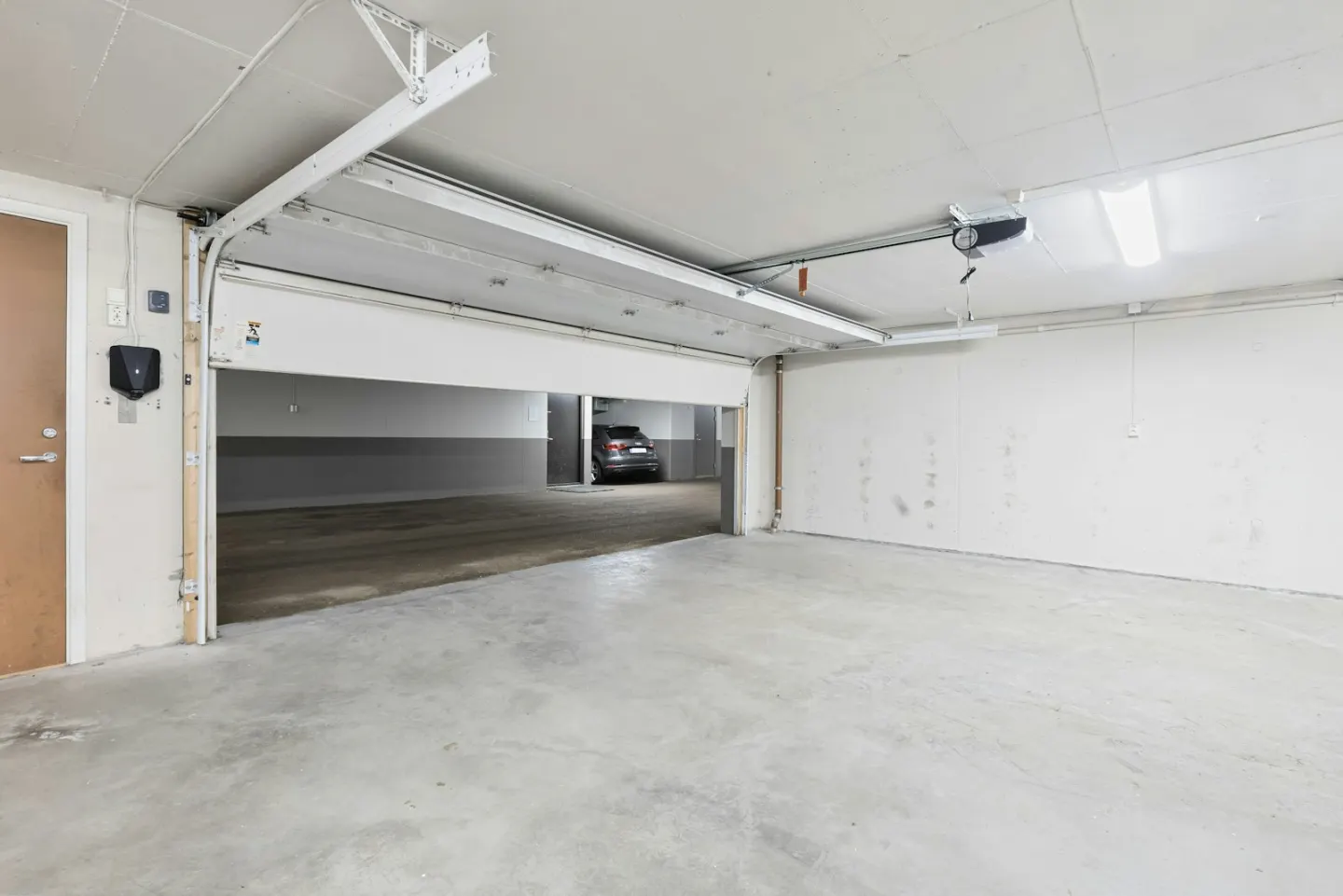
Garage interior used as a contextual Genie opener image

Guide 12

Genie Opener Repair

Genie openers use the Intellicode system and Safe-T-Beam sensors, so remotes, accessories, and diagnostic steps are not interchangeable with other brands.

  • Confirm the opener is a Genie before buying any accessory.
  • Note the Safe-T-Beam indicator colours you can see.
  • Older Genie models may have discontinued parts.
Open the complete guide →
Residential garage exterior used as a contextual opener-repair image

Guide 13

Chamberlain Opener Repair

Chamberlain and LiftMaster share a manufacturer and code system, but the consumer models differ in battery backup, myQ hardware, and which parts are serviceable.

  • Note the beep or blink pattern before calling.
  • Have the model number from the motor unit ready.
  • A motor that runs without moving the door is often a gear or trolley issue.
Open the complete guide →
Garage door tracks used as a contextual track-repair image

Guide 14

Garage Door Track Repair

A door that binds at the same point, grinds on one side, or shows a gap between roller and rail usually points at track alignment or damage rather than the springs.

  • Stop operating a door that binds, it bends more track.
  • Note where in the travel it catches.
  • Never try to force a door back onto its track.
Open the complete guide →
Residential garage door detail used as a contextual brand-repair image

Guide 15

Clopay Door Repair

Clopay is the largest residential door manufacturer in North America, so replacement sections are more often still available than with a discontinued brand.

  • Find the model label inside the door before pricing.
  • Series decides which panels and struts fit.
  • A new section rarely matches a weathered door exactly.
Open the complete guide →
Closed sectional garage door used as a contextual spring-system image

Guide 16

Wayne Dalton Door Repair

Many Wayne Dalton doors use TorqueMaster, a counterbalance with the spring enclosed in a tube, so a failure shows up as a heavy door with nothing visibly broken.

  • A heavy door with no visible break can be an enclosed spring.
  • Ask whether the provider has worked on TorqueMaster.
  • Conventional torsion springs are not a substitute.
Open the complete guide →
Garage door installation used as a contextual brand-repair image

Guide 17

Amarr Door Repair

Amarr builds both residential and commercial lines, and the two carry different hardware duty ratings, so identifying the line comes before any parts conversation.

  • Residential and commercial hardware are not interchangeable.
  • Check the label inside the door for the line.
  • Discontinued panel styles are the usual blocker.
Open the complete guide →
Garage door maintenance used as a contextual brand-repair image

Guide 18

Raynor Door Repair

Raynor distributes through authorised dealers rather than retail, so brand-specific sections and hardware are commonly sourced through dealer channels and lead time matters.

  • Ask up front whether the provider can source Raynor parts.
  • Confirm genuine versus equivalent hardware.
  • Conventional parts are standard; sections are not.
Open the complete guide →
Residential property exterior used as a contextual gate-repair image

Guide 19

Driveway Gate Repair

An automatic driveway gate combines a leaf, an operator, power, safety devices, and access control. The fault is as often electrical or in a safety device as it is mechanical.

  • No response at all usually points at power.
  • Opens but won't close is usually a safety device.
  • Never bypass gate safety devices to keep it working.
Open the complete guide →
Metal track detail used as a contextual sliding-gate image

Guide 20

Sliding Gate Repair

Sliding gates ride on rollers along a track and are driven by a chain or rack. Almost every mechanical fault traces to one of those three, and the symptom says which.

  • Grinding along the run points at rollers.
  • Jamming at one spot points at the track.
  • A derailed leaf is heavy and unstable, keep clear.
Open the complete guide →
Metalwork detail used as a contextual iron-gate image

Guide 21

Wrought Iron Gate Repair

Iron gates fail structurally rather than mechanically: rust at the joints, a cracked weld, a sagging leaf, or a post that has moved. The repair is fabrication work.

  • Surface rust is cosmetic, rust at a weld is structural.
  • A dragging leaf is often the post, not the gate.
  • Matching an older decorative profile is the hard part.
Open the complete guide →
Property exterior used as a contextual chain-link gate image

Guide 22

Chain-Link Gate Repair

Chain-link gates fail simply: a racked frame, worn hinges, a leaning post, or damaged fabric. Most are repairable without replacing the whole gate.

  • A dragging gate is usually a post that has moved.
  • A racked frame can often be pulled square and braced.
  • Torn fabric can usually be repaired, not replaced.
Open the complete guide →

Before authorizing work

Ask for a Complete Written Proposal

Confirm the provider's identity, applicable credentials, insurance, diagnosis or site assessment, included work, parts or materials, labor, travel or service charges, debris or cleanup, tax, exclusions, total price, schedule, and warranty terms.

Ready to describe the Clarksville request?

Submitting does not schedule or authorize service. The request may be shared with no more than one independent provider.

Call Now: (931) 463‑0015 Request a Free Quote